Key takeaways
- WhatsApp marketing on the Business API requires opted-in contacts and Meta-approved templates for business-initiated messages.
- Chatbox AI cites a 98% open rate for WhatsApp compared with around 20% for email.
- Automated journeys, welcome, cart recovery, post-purchase, win-back, usually outperform one-off blasts.
- Customer replies open a 24-hour window in which free-form, free service messages are allowed.
- Measure revenue or conversions per campaign, not just delivery and read rates.
WhatsApp has become the default messaging app for hundreds of millions of people in India and many other markets. For brands, that makes it the channel customers actually open. But WhatsApp is not email with green bubbles. It is personal, it is two-way, and Meta's rules reward relevance and punish spam.
This guide walks through how to build a WhatsApp marketing strategy that grows revenue without burning your list: from goals and opt-in to automation, measurement and a 30-day launch plan.
Why should WhatsApp be part of your marketing mix?
- Attention. Chatbox AI cites a 98% open rate for WhatsApp messages, compared with around 20% for email.
- Conversation. Customers can reply, ask questions and buy in the same chat.
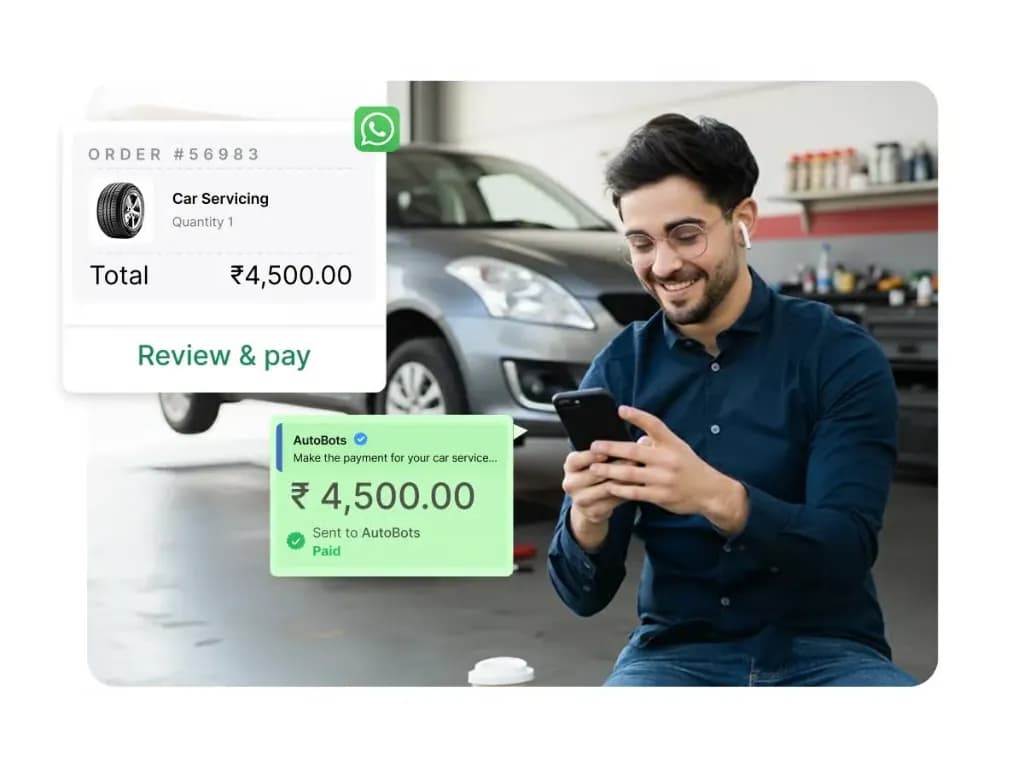
- Rich formats. Images, videos, buttons, product catalogues and payment links.
- No feed algorithm. Unlike social posts, your message goes straight to the customer's chat list, provided they opted in.
The trade-off is that WhatsApp is a trusted, personal space. The strategy below is designed around respecting that.
Step 1: What goal should your WhatsApp marketing serve?
Pick one or two primary goals for the first quarter:
| Goal | Example WhatsApp tactics | Main metric |
|---|---|---|
| Recover lost revenue | Abandoned cart and checkout reminders | Recovered orders |
| Increase repeat purchases | Post-purchase cross-sell, replenishment reminders | Repeat purchase rate |
| Generate leads | Click-to-WhatsApp ads, chatbot qualification | Qualified leads |
| Launch products | Segmented broadcasts with rich media | Launch-day sales |
| Reduce support load | FAQ chatbot, order tracking bot | Queries handled by bot |
Focusing on one goal keeps your templates, segments and reporting simple.
Step 2: How do you build an opted-in WhatsApp list?
Everything depends on consent. Meta requires an opt-in before you message anyone, and opted-in audiences are also the ones who engage.
High-performing opt-in sources:
- Checkout checkbox: "Get order updates on WhatsApp". Chatbox AI's Shopify integration makes this simple.
- Website widget and pop-ups: offer something useful, like early access or a size guide.
- Click-to-WhatsApp ads: the customer starts the chat, so you can reply immediately. See our Click-to-WhatsApp ads guide.
- QR codes on packaging, receipts and stores.
- Keyword campaigns: "WhatsApp SALE to our number" on a billboard or Instagram story, handled by keyword triggers.
Tag each contact with where and when they opted in. It helps with compliance and segmentation.
Step 3: How should you segment your audience?
Sending the same message to everyone is the fastest way to lower your quality rating. Start with a few practical segments:
- New subscribers (no purchase yet)
- First-time buyers
- Repeat buyers / VIPs
- Lapsed customers (no purchase in 90+ days)
- Category interest (e.g. skincare vs haircare)
- Language preference
Chatbox AI's contact management supports tags, custom attributes and smart segments, and the Growth plan adds audience filters to broadcasts.
Step 4: Which templates do you need?
Business-initiated messages require Meta-approved templates. A starter set for most brands:
- Welcome message (marketing): thank new subscribers, set expectations, offer a first-order incentive.
- Cart reminder (marketing): product image, name, checkout button.
- Order confirmation and shipping update (utility).
- Feedback request (utility or marketing, depending on content).
- Offer broadcast (marketing): rich media header, one clear call to action.
- Win-back (marketing), for lapsed customers.
Get the category right: transactional messages without promotional content qualify as utility and cost much less. Use the template library as a starting point.
Step 5: Which journeys should you automate?
Automated, triggered messages reach people at the moment they care most. Prioritise these:
Welcome series
When someone opts in, send a welcome with a clear reason to buy, then a follow-up a few days later with bestsellers.
Abandoned cart recovery
A reminder about an hour after checkout abandonment, with the product and a direct checkout link. Our abandoned cart recovery playbook covers timing and copy.
"Cart recovery campaigns on Chatbox AI are printing money for us right now!" - Neha Gupta, Operations Manager, FreshCart
Post-purchase journey
Order confirmation, shipping updates, delivery confirmation, then a feedback request about 24 hours after delivery. For COD orders, add a confirmation step to reduce return-to-origin.
Replenishment and cross-sell
For consumables, remind customers when they are likely to run out. For other products, suggest complementary items.
Win-back
A personalised offer for customers who have not bought in a few months.
Build these with Chatbox AI automation: keyword triggers, drip sequences and event-based messages from Shopify or your backend.
Step 6: How do you handle the conversations campaigns create?
Every good campaign creates replies: size questions, delivery questions, "is this available in blue?". Those replies open a 24-hour customer service window in which service messages are free, and they are often your hottest leads.
- Route replies to the right agent with a shared team inbox.
- Use quick replies for common answers.
- Let a no-code chatbot handle simple questions and hand off complex ones.
Step 7: What should you measure?
Delivery and read rates are health checks, not success metrics. Track:
| Metric | Why it matters |
|---|---|
| Click-through rate | Is the offer compelling? |
| Reply rate | Are customers engaging? |
| Conversions and revenue per campaign | Is WhatsApp paying for itself? |
| Cost per conversion | Meta charges plus platform cost vs revenue |
| Opt-outs and blocks | Early warning for quality problems |
| Quality rating | Your licence to scale |
Chatbox AI analytics and reports cover delivery, read and click rates, agent performance and revenue attribution.
What mistakes should you avoid?
- Broadcasting to old, un-consented lists.
- Sending too often to the same people.
- Using utility templates for promotions (Meta will re-categorise them).
- Ignoring replies, every unanswered reply is a lost sale.
- Long, text-heavy messages with no image or button.
- Measuring success by "messages sent".
What does a 30-day launch plan look like?
| Week | Focus | Actions |
|---|---|---|
| 1 | Foundations | Connect the API, set up profile, add opt-in to checkout and website, create core templates |
| 2 | Automation | Launch welcome series, cart recovery and order updates |
| 3 | First campaign | Segmented broadcast to your most engaged customers; staff the inbox |
| 4 | Review and scale | Compare revenue per campaign, refine segments, plan next month's calendar |
Start small with your most engaged contacts. As your messaging limit grows through the 1K, 10K and 100K tiers, widen your audience.
Which industries benefit most?
WhatsApp marketing works across sectors: e-commerce and retail for sales and cart recovery, edtech for lead nurturing and class reminders, real estate for site-visit follow-ups, and travel for bookings and itineraries. For India-specific tactics for D2C brands, read WhatsApp marketing for D2C brands in India.
Ready to put your strategy into action?
A good WhatsApp strategy is simple: earn permission, send fewer but better messages, automate the moments that matter and answer every reply. Explore WhatsApp for marketing to see how Chatbox AI supports each step, or compare plans on the pricing page.
Start your 7-day free trial, no credit card required, and launch your first WhatsApp campaign this week.
Frequently asked questions
Yes, when you follow Meta's WhatsApp Business policies and applicable Indian law. That means collecting opt-in, using approved templates for business-initiated messages, honouring opt-outs and handling personal data responsibly.
Is WhatsApp marketing legal in India? Yes, when you follow Meta's WhatsApp Business policies and applicable Indian law. That means collecting opt-in, using approved templates for business-initiated messages, honouring opt-outs and handling personal data responsibly.
How often should I send WhatsApp marketing messages? There is no fixed number, but most brands do best with a few well-targeted messages a month per customer, plus triggered messages such as cart reminders. Watch block rates and your quality rating, and slow down if they worsen.
Do I need the WhatsApp Business API for marketing? For anything beyond small-scale manual messaging, yes. The API enables template broadcasts to opted-in contacts, automation, chatbots, integrations and analytics that the free app does not offer.
What is a good first WhatsApp campaign? Abandoned cart recovery or a welcome series for new opt-ins. Both target people with clear intent, are easy to measure and usually pay back quickly.
How much does WhatsApp marketing cost? Meta charges per marketing template, approximately ₹0.58 in India, subject to change, plus your platform plan. Chatbox AI starts at ₹999 per month with a 7-day free trial.
Can I run WhatsApp marketing without a developer? Yes. Chatbox AI provides no-code broadcasts, a visual chatbot builder, automation and native Shopify and Razorpay integrations, so marketers can launch without engineering help.